
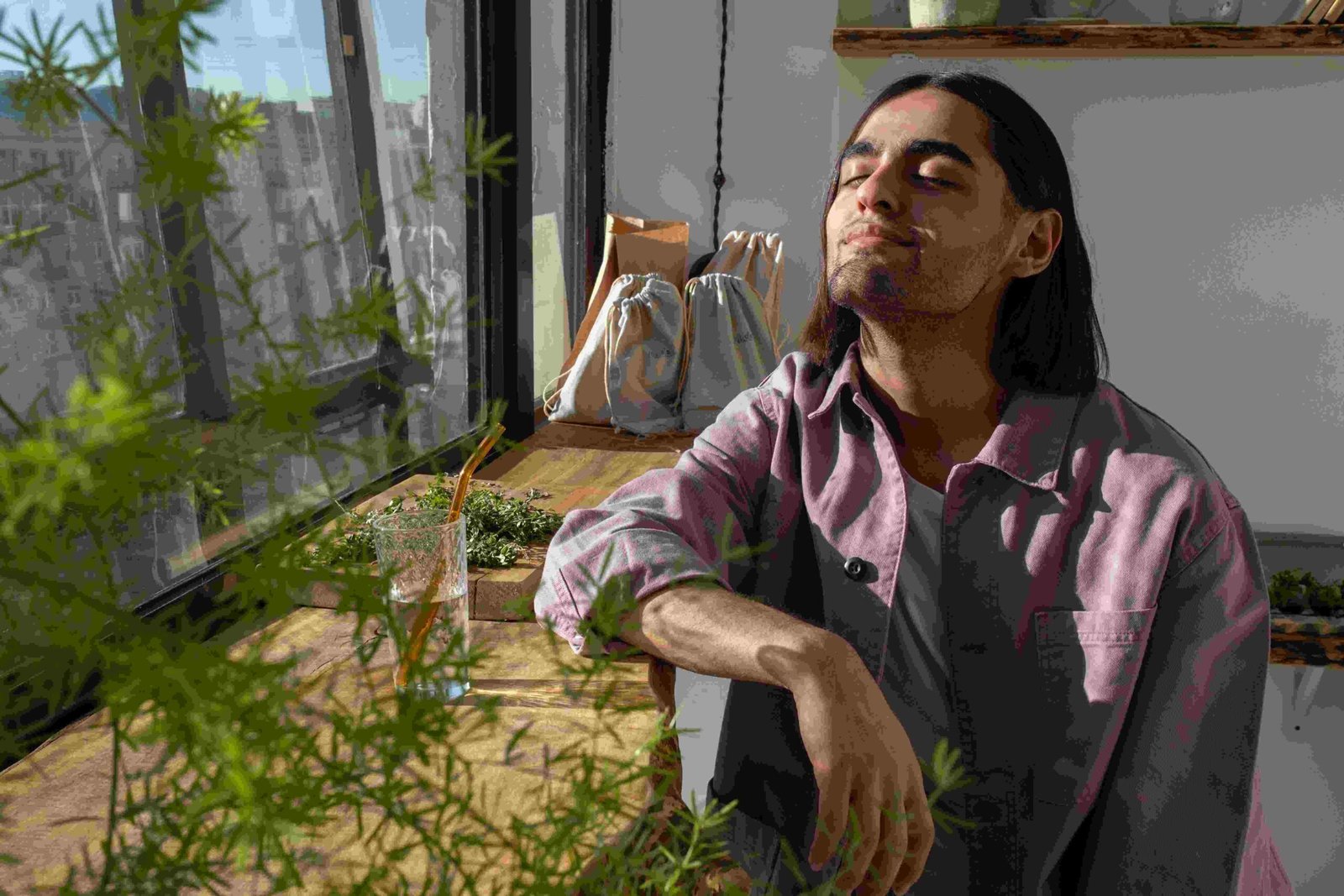
For a long time, I thought I was just a moody person.
Not dramatically moody — I wasn’t having breakdowns or crises. Just this persistent low-grade flatness that sat underneath everything. Some days were fine. Some days felt like I was dragging myself through treacle for no identifiable reason. And because nothing was obviously wrong, I never really examined it. I just assumed it was personality. Temperament. Just how I was built.
It wasn’t until I had a stretch of genuinely good days — a week in summer where I felt lighter, more present, more like myself — that I started paying attention. What was different that week? I’d been outside more. I’d slept properly for once. I wasn’t checking the news obsessively. I’d seen friends twice, which was more than usual.
None of those things were revolutionary. But the combination of them had shifted something real.
That started about two years of slow, deliberate experimentation — keeping some things, dropping others, noticing what actually moved the needle on how I felt from day to day. Not chasing happiness exactly, but trying to understand what was quietly making things harder than they needed to be.
Here’s what I found.
First, I Had to Admit My Baseline Was Off
Before I get into the specific changes, I want to say something I wish someone had said to me earlier: a low or flat mood that’s been around long enough starts to feel like your personality. You forget you weren’t always like this.
I’m not talking about clinical depression — if you think that’s what you’re dealing with, please talk to a doctor rather than trying to lifestyle-hack your way out of it. But for a lot of people, there’s a version of “not quite right” that’s accumulated slowly through bad sleep, too much screen time, not enough movement, too much isolation, and a diet that’s running on caffeine and convenience food.
That was more or less me.
The good news is that the things which gradually created that state are also the things that, changed carefully, can shift it back. It’s just slower than you want it to be, and less dramatic than the internet would have you believe.
Change One: Morning Light Before Morning Screens
This was the first thing I tried, mostly because it cost nothing and required almost no effort.
I started going outside within the first twenty minutes of waking up. Not for exercise — just standing outside with my coffee for five to ten minutes before looking at my phone.
The science behind this is straightforward: natural light in the morning, especially within the first hour after waking, helps set your circadian rhythm — the internal clock that regulates sleep, hormones, energy, and mood. Without it, the rhythm drifts, and a drifted circadian rhythm produces worse sleep, which produces worse mood, which makes everything harder.
I used Rise Science (an app focused on circadian biology rather than generic sleep advice) to understand my own patterns better. It calculates your “energy peaks” based on sleep data and wake time, and I started noticing that the days I got morning light also tended to be days where the app showed a stronger energy curve in the afternoon.
Correlation isn’t causation, and I’m not making medical claims here. But the pattern was consistent enough over months that I kept the habit.
The change is almost embarrassingly simple: coffee outside, ten minutes, every morning. No podcast, no phone. Just light and whatever’s happening outside. Some days it feels pointless. Most days it quietly anchors the start of everything else.
Change Two: I Stopped Following the News in Real Time
This one was harder to admit I needed to do.
I’d always thought of staying informed as a responsibility. Checking the news frequently felt like being an engaged, aware person. What it actually was, in practice, was feeding my nervous system a constant stream of upsetting information with no ability to act on any of it, multiple times a day.
The anxiety I felt after a twenty-minute news session wasn’t hypothetical. My shoulders would be up near my ears. My mind would be scattered. I’d carry whatever I’d read into the next few hours of my day like a low-frequency distress signal.
I didn’t quit the news. I just changed my relationship with it.
Now I read a single briefing newsletter — I use The Economist’s Espresso — once in the morning with breakfast. That’s it. No real-time news apps, no Twitter/X news, no breaking news notifications. If something genuinely important happens, I’ll find out through conversations with actual people.
The difference this made to my baseline anxiety was significant. Not because I became less informed — the briefing covers everything that actually matters — but because I removed the drip-feed of urgency that had been running in the background all day.
If you’re not ready to cut news consumption, at least try delaying it. Nothing before 9am, nothing after 8pm. See what that does to your evenings.
Change Three: Physical Touch and Social Connection (The Unsexy One)
I work from home and live alone. Which means, if I’m not deliberate about it, I can go entire days without having a real conversation or any physical human contact at all.
I spent a long time not connecting this to mood. Then a friend visited for a weekend and I noticed I felt genuinely better for about three days afterwards — not just during the visit. Something about actual in-person connection with someone I care about had a lingering effect that a phone call or a video chat didn’t quite replicate.
The research on loneliness and mood is fairly extensive and points in a consistent direction: humans are deeply social animals, and chronic under-connection has real effects on mental health, not just emotional ones.
What I changed: I made social plans non-negotiable rather than optional. Instead of saying “I should see people more” (which translated to never), I booked things in advance and treated them like appointments I couldn’t cancel on myself. One proper in-person plan per week, minimum. Doesn’t have to be big — coffee with a friend, a walk with someone, dinner at someone’s house.
The weeks I do this consistently, my mood is measurably better. The weeks I don’t — usually because work got busy and it felt like I couldn’t afford the time — I notice the flatness creeping back by Thursday or Friday.
Change Four: Cleaning Up the Afternoon Crash
For most of my adult life, 3pm was a write-off. I’d be half-functional, craving sugar or caffeine, doing my worst work and knowing it.
I blamed this on not getting enough sleep. Sometimes that was true. But when I started paying attention to what I’d eaten for lunch, the pattern was obvious: a heavy, carbohydrate-dense lunch with almost no protein produced a reliable energy crash ninety minutes later. A lunch with more protein and fewer simple carbs didn’t.
I wasn’t eating badly by any normal standard. But I was eating in a way that was setting up a daily mood and energy dip that I’d been treating as inevitable.
The practical change was simple. I started making sure lunch had a meaningful protein source — eggs, lentils, chicken, cottage cheese, whatever was easy — rather than being mostly bread, pasta, or rice. I also stopped eating lunch at my desk while working, which I think matters for digestion and for the psychological reset that a proper break provides.
The 3pm crash didn’t disappear overnight. But over a few weeks it became less of a crash and more of a slight dip. By about a month in, it was mostly gone on the days I ate properly at lunch.
MyFitnessPal helped me see the protein picture clearly during the first few weeks. I wasn’t obsessing over calories — just checking whether I was actually getting a meaningful amount of protein in the middle of the day.
Change Five: Creating Small Things to Look Forward To
This one sounds almost too simple to be real, but it’s had an outsized effect on how my days feel.
I started deliberately scheduling small things I enjoy throughout the week. Not big events — I mean small things. A podcast episode I’ve been saving for a particular walk. Making a specific meal on a specific evening. A film I’ve chosen intentionally rather than defaulting to whatever’s on. A coffee from a place I actually like rather than making instant at home.
What I was doing was creating small, distributed points of positive anticipation across my week. Research in positive psychology (and basic intuition if you think about it) suggests that anticipating a good thing produces positive emotion before the event — sometimes more than the event itself. Building more of these into the week means more moments of forward-looking feeling.
The mistake I’d been making was saving enjoyable things for “when things calm down” — a perpetually deferred reward that never quite arrived. Now I don’t wait for the big reward. I distribute smaller ones.
Change Six: Reducing Decision Fatigue in the Evening
Decision fatigue is real, and I was causing myself unnecessary amounts of it.
By evening, I’d burned through most of my mental capacity for the day. Then I’d stand in front of the fridge for ten minutes unable to decide what to make. Then scroll Netflix for twenty minutes unable to pick anything. Then lie in bed unable to decide whether to read, sleep, or keep looking at my phone.
None of these are high-stakes decisions. But they were happening at exactly the point in the day when I had the least cognitive resources to make them, and the friction produced a low-level irritation that coloured the whole evening.
My fix: I make the unimportant evening decisions earlier in the day when it costs me nothing.
Dinner plan decided by noon. What I’m watching tonight chosen during lunch. Whether I’m reading or not (yes, always) decided as a standing default rather than something I negotiate with myself about when tired.
This sounds like overthinking small things, but it actually means my evenings feel less like a series of minor obstacles and more like a sequence of things I’ve already decided to enjoy.
What Didn’t Work (So You Can Skip It)
Journaling every day. I kept reading that morning journaling would transform my mood. I tried it for three months. I found it made me more inside my own head, not less, and for someone who already over-thinks, that wasn’t helpful. Some people clearly benefit enormously from it. I’m apparently not one of them.
Cutting out alcohol completely. I tried a month off. My sleep improved slightly. My mood didn’t change notably. I’ve settled into having less, but the “complete sobriety cures everything” narrative didn’t match my experience.
Forcing positivity practices. Gratitude lists, affirmations, anything that required me to manufacture a feeling I didn’t actually have. They produced mild guilt when they didn’t work, which is the opposite of the point. I dropped them without ceremony.
Trying to fix everything at once. Every time I attempted a complete routine overhaul, I lasted a week and felt worse about myself for failing. One change, embedded properly, then the next. That’s the only sequencing that’s ever actually worked for me.
Where Things Actually Landed
Two years in, the flatness I used to carry around like a backpack I’d forgotten I was wearing is mostly gone. Not because my life is easier — it isn’t, particularly. But the daily texture of it has changed.
I notice the good parts of days more. I recover from bad hours faster. The baseline I return to, when nothing specific is pulling it up or down, is better than it used to be.
None of the individual changes are impressive. Morning light, a news boundary, protein at lunch, planned social time, small things to look forward to — none of it sounds like it should move the needle much.
But compound a handful of small positives running daily for eighteen months, and the cumulative effect is substantial. The things that were quietly making each day harder, removed one at a time, leave more room for the things that make it better.
That’s all it really was. Paying attention, making small adjustments, and giving them time to compound.
Turns out I wasn’t just a moody person. I was a person running on conditions that made good moods harder than they needed to be.
That’s a much more hopeful thing to discover.

- Healthy Snacks for Work: What Actually Kept Me From Raiding the Vending Machine at 3 PM - July 12, 2026
- What I Learned After Spending More Time Outdoors - July 10, 2026
- How I Learned to Enjoy Healthy Living Without Pressure - July 8, 2026