
There was a point last year when I was waking up already exhausted. I’d reach for my phone before I even sat up in bed, scroll through notifications for 20 minutes, and by the time I made it to the kitchen for coffee, I felt like I’d already lost the day. Sound familiar?
I wasn’t burned out in any dramatic way — no breakdown, no crisis. Just this slow, grinding feeling of never quite catching up with myself. I kept reading about “self-care routines” and rolling my eyes because most of what I saw felt performative. Face masks and bath bombs aren’t going to fix the fact that you’re replying to emails at 11 PM.
So I stopped looking for inspiration and started paying attention to what actually made me feel like a human being again. What I came up with isn’t glamorous. It’s not a 27-step morning ritual. But it genuinely changed how my days feel — and I think some of it might work for you too.
The Moment I Realized I Needed to Change Something
It was a Tuesday. I’d worked from home, barely left my chair, eaten lunch over my keyboard, and by 6 PM I couldn’t tell you a single thing I’d enjoyed that day. Not one thing.
I went for a walk — not because it was part of any routine, just because I needed to get out — and I felt noticeably better within about ten minutes. That was annoying to admit, honestly. Such a small thing.
That walk made me start asking: what are the tiny things that actually reset me? Not what wellness influencers say should reset me. What actually works for me?
That question is probably the most important starting point for any self-care routine.
Step 1: Build a Morning That’s Actually Yours (Even 20 Minutes Is Enough)
I’m not a 5 AM person, and I’m never going to be. But I did start protecting the first 20 minutes of my morning from my phone.
No notifications. No news. No social media. Just coffee, a window, and whatever I felt like — sometimes a book, sometimes just sitting there listening to the neighborhood wake up.
This felt weird at first. My brain kept reaching for something to scroll. But after about a week, those 20 minutes became the part of the day I actually looked forward to.
If you want a little structure in that window, I found the Insight Timer app helpful — it has free guided breathing exercises and meditations, and some are as short as 3 minutes. I’d do a quick breathing session, drink my coffee, and that was it. Nothing fancy.
The key is: the first part of your morning should belong to you, not your inbox.
Step 2: Move Your Body — But Make It Feel Like Less of a Chore
I used to think “exercise” meant a 45-minute gym session or nothing. That’s not true, and that all-or-nothing thinking kept me sedentary on most days.
Now I aim for movement I actually enjoy. For me that’s a 20-minute walk in the afternoon, usually around 3 PM when my focus starts to dip anyway. I sometimes listen to a podcast — I’ve been rotating between Huberman Lab for the nerdy health stuff and random comedy shows when I just want to zone out.
Other low-effort things that actually helped:
- Stretching while watching TV — I bought a cheap yoga mat, put it in front of the couch, and started doing basic stretches during whatever I was watching anyway
- Walking phone calls — if a friend or family member calls, I take it outside and walk while we talk
- The 5-minute rule — when I didn’t feel like moving at all, I told myself “just 5 minutes.” Usually I kept going. Sometimes I didn’t, and that was fine too.
The goal isn’t fitness. It’s making sure your body doesn’t feel like furniture by the end of the day.
Step 3: Actually Eat Something — And Notice How It Affects Your Mood
This sounds obvious, but I spent years treating food as an afterthought on busy days. Skipping breakfast, grabbing something random, eating lunch at 3 PM because I “forgot.”
When I started eating real meals at actual times — nothing complicated, just consistent — my afternoon energy improved dramatically. I stopped getting that 2 PM crash that used to send me straight to a second (or third) coffee.
I’m not a nutritionist, and I’m not going to pretend I eat perfectly. But a few small shifts made a real difference:
- Breakfast with protein — eggs, Greek yogurt, peanut butter toast. Whatever’s quick.
- Lunch away from my desk — even if it’s just sitting on the couch, stepping away changes something mentally.
- Cutting the afternoon sugar loop — I swapped the mid-afternoon chocolate bar for fruit and some nuts. Less crash.
I also started tracking what I ate for about two weeks using MyFitnessPal — not to count calories obsessively, but just to become aware. Turns out I was eating almost nothing before 1 PM and then making up for it in the evening. No wonder I felt off.
Step 4: Create an End-of-Work Ritual (This One Changed Everything)
Working from home means your job never really ends unless you make it end. I used to “finish work” and then drift back to my laptop an hour later because I hadn’t mentally clocked out.
I started doing a tiny end-of-work ritual: write down three things I accomplished that day, write the top priority for tomorrow, close every tab, and shut the laptop. Takes about five minutes.
That’s it. But it creates a psychological finish line. Once the laptop is closed, work is done.
Some people find it helpful to physically change clothes after work too — like a signal to your brain that the work mode is over. I started doing this on days when I had back-to-back calls and felt frazzled, and it works surprisingly well. Something about changing out of “work clothes” (even if those are just slightly nicer sweatpants) hits different.
Step 5: Wind Down Before Bed — And Stop Treating Sleep Like a Deadline
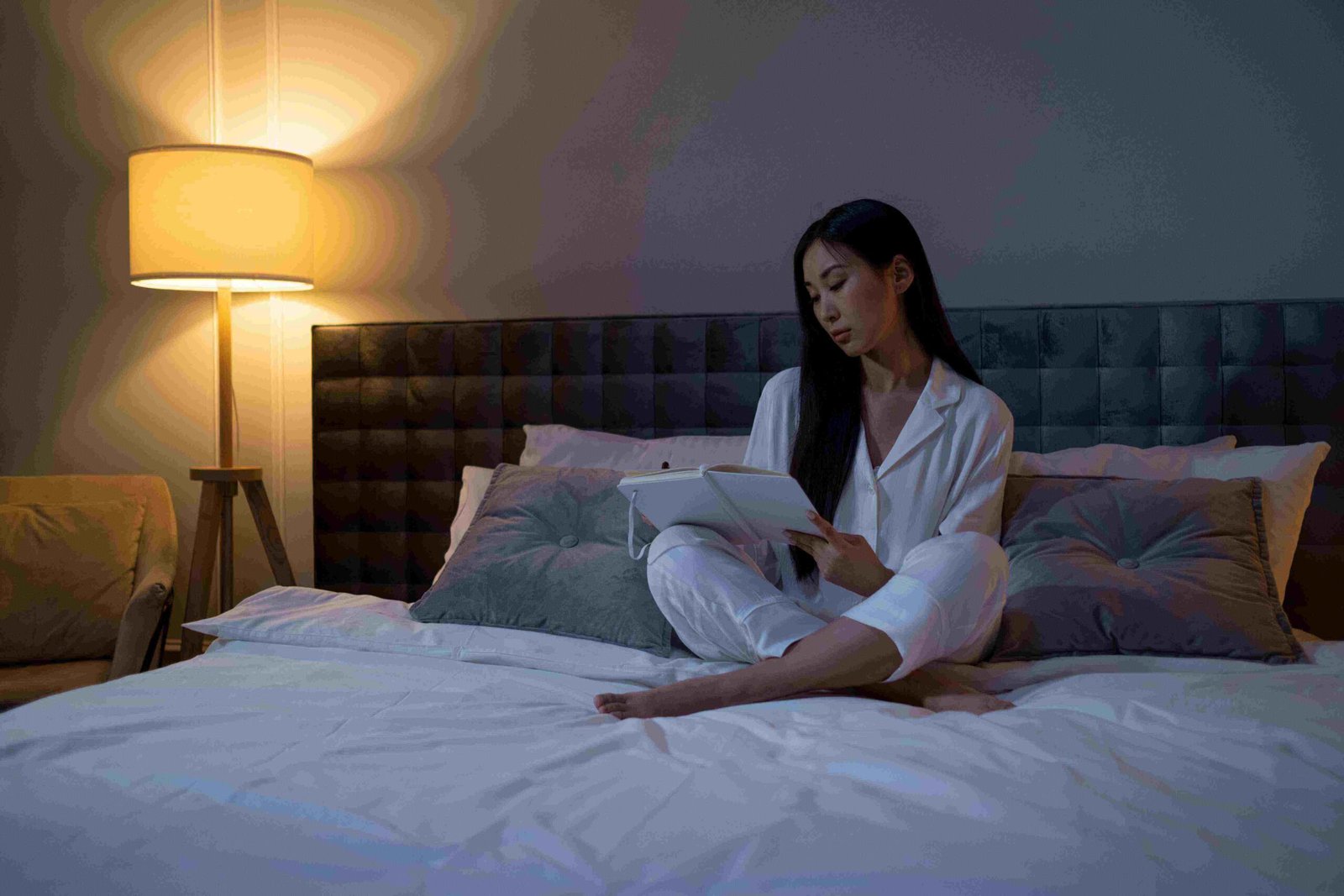
I used to treat bedtime like a hard stop: lie down, stare at my phone, eventually fall asleep at some unpredictable hour. Then wonder why I woke up feeling like a damp towel.
Now I give myself about 30 minutes of wind-down time before I actually try to sleep. This means:
- Dimming the lights — harsh overhead lighting tells your brain it’s still daytime
- No screens 20–30 minutes before sleep — this one is hard, but it’s real. I read an actual paperback instead.
- Writing down anything that’s still circling my brain — a kind of “brain dump” into a notebook so my mind stops rehearsing it
The Sleep Cycle app is worth mentioning here. I used it for a few months to understand my sleep patterns, and seeing the data made me take sleep more seriously. Turns out I was regularly getting about 5.5 hours when I thought I was getting 7. The phone was the culprit almost every time.
Mistakes I Made (So You Don’t Have To)
Trying to overhaul everything at once. The first time I tried to “build a routine,” I wrote out this elaborate 12-step morning protocol that I abandoned by day three. Start with one thing. Just one. Get that locked in before adding another.
Doing it for appearance. I went through a phase where I was doing things because they seemed like good self-care — journaling when I hated journaling, doing yoga when I just wanted to walk. Do what actually helps you, not what looks good on paper.
Skipping rest when things got busy. The weeks I needed self-care most were the weeks I dropped the routine first. Now I treat the basics — sleep, movement, decent food — like non-negotiables, the same way I treat a work deadline.
Expecting immediate results. Nothing I described above had a dramatic overnight effect. But over 2–3 weeks? Genuinely different quality of life. Stick with it long enough to actually feel it.
The Honest Truth About “Self-Care”
Most self-care content is trying to sell you something — a supplement, an app subscription, a retreat, a gadget. And while some products are genuinely useful, the foundation of feeling better is almost always free: sleep, movement, real food, a little quiet, and some version of a consistent daily rhythm.
You don’t need the perfect routine. You need a routine — one that fits your actual life, not someone else’s Pinterest board.
Start small. Pick one thing from this list that resonated with you. Try it for a week. See how it feels. That’s it. That’s the whole strategy.
And if it doesn’t work? Try something else. You’re not failing at self-care — you’re just figuring out what works for you. That process is kind of the point.

- Healthy Snacks for Work: What Actually Kept Me From Raiding the Vending Machine at 3 PM - July 12, 2026
- What I Learned After Spending More Time Outdoors - July 10, 2026
- How I Learned to Enjoy Healthy Living Without Pressure - July 8, 2026