
Simple Kitchen Habits That Help Me Eat Better
For a long time, my kitchen was basically a room I walked through on the way to ordering delivery.
I’d open the fridge, stare at some leftover rice, a half-wilted bag of spinach, and a mysterious container I wasn’t brave enough to open — and then just pick up my phone and order a burger. Not because I didn’t want to eat well. I genuinely did. But cooking felt like this whole production that required energy I didn’t have at 7 PM after a full day of work.
The thing nobody told me is that eating better has very little to do with willpower or nutrition knowledge. It has almost everything to do with what your kitchen looks like and how it’s set up. When your environment makes the good choice the easy choice, you don’t have to fight yourself every evening.
It took me an embarrassingly long time to figure that out. But once I did, things shifted pretty quickly — and I didn’t overhaul my entire life to make it happen.
Here’s what actually worked.
The Fridge Was the First Thing I Had to Fix
I used to put groceries away the exact way they came out of the bag. Yogurt in the back. Fruit in the crisper drawer, mostly forgotten. Leftovers shoved in wherever they fit. Then I’d open the fridge, see a wall of random stuff, and have no idea what to make.
The fix was almost stupidly simple: put the healthy stuff at eye level and at the front.
I started keeping a clear container of washed, cut fruit right on the middle shelf. Hummus and cut vegetables right next to it. Water right at the front. Leftovers in clearly labeled containers where I could actually see them.
Within a week I was eating more fruit than I had in months — not because I was trying to, but because it was just there when I opened the fridge. The bag of chips I used to snack on was now at the back of the pantry behind a box of oats. I ate less of it without making any conscious decision to do so.
This principle is called “environment design” and it sounds very fancy but it basically just means: arrange your stuff so the default choice is a decent one.
Washing and Prepping Produce Right When You Get Home
This one changed things more than almost anything else.
I used to buy vegetables with good intentions and then let them slowly die in the crisper drawer because by the time I wanted to cook, I didn’t have the energy to also wash, peel, and chop everything. So I’d skip it and eat cereal instead.
Now, within an hour of getting home from the grocery store, I do a quick prep session. Nothing elaborate:
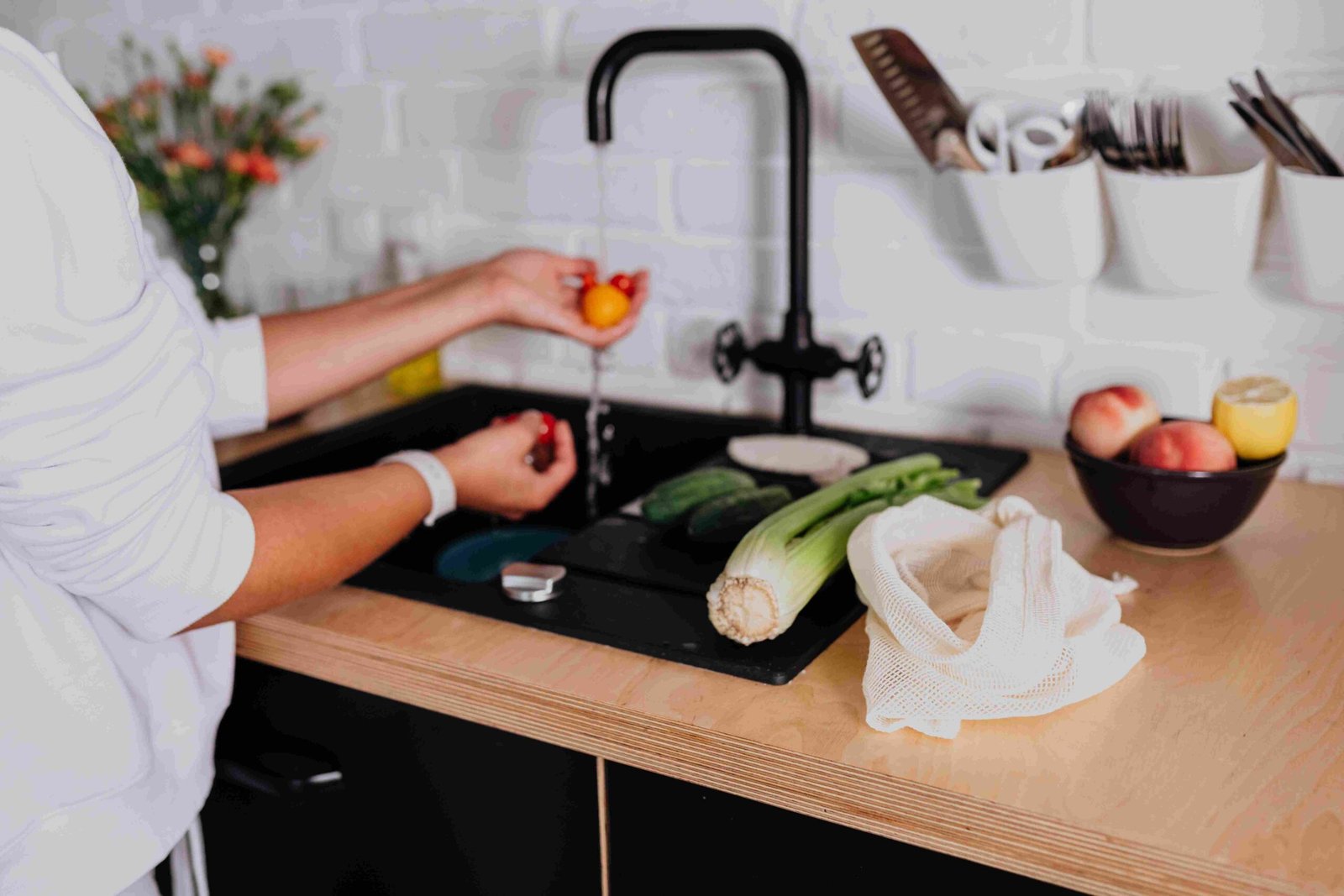
- Rinse all the fruit and put it in a bowl on the counter
- Wash and dry the leafy greens, store them in a container with a paper towel (this keeps them fresh way longer)
- Chop any vegetables I know I’ll use that week — onions, bell peppers, carrots — and put them in containers in the fridge
The whole thing takes maybe 20–25 minutes while I’m still in “errand mode” and haven’t fully relaxed yet. But it means that on Wednesday night when I’m tired and hungry, dinner goes from being a 45-minute project to a 15-minute one. That difference matters a lot at 7 PM.
I started using OXO pop containers for prepped ingredients — they’re airtight, stackable, and you can actually see what’s inside. Before that I was using mismatched plastic bags that I’d forget about. The visible storage alone reduced my food waste noticeably.
Keeping a “Go-To Meal” Rotation (And Stocking for It)
Here’s a mistake I made for years: I’d go grocery shopping without a plan, buy random ingredients that sounded good, and end up with a fridge full of things that didn’t go together into any actual meal.
What works better is having 4 or 5 meals I genuinely enjoy eating, know how to make without thinking too hard, and can cycle through during the week. Not a rigid meal plan — just a loose rotation.
Mine currently looks something like:
- Stir-fry with whatever vegetables are around + rice + some protein
- Eggs with roasted vegetables and toast
- A big grain bowl (I usually cook a batch of quinoa or farro at the start of the week)
- Pasta with olive oil, garlic, greens, and parmesan
- Tacos or burrito bowls
When I go grocery shopping, I shop for these meals specifically. That means I always have the right ingredients on hand, nothing goes to waste, and I’m never staring into the fridge wondering what to make with butternut squash and half a block of tofu.
The Mealime app helped me get into this habit initially — it lets you pick meals for the week and auto-generates a shopping list. I don’t use it religiously anymore, but it trained me to think in weekly meal cycles instead of buying random things and hoping for the best.
The Batch Cooking Thing (It Doesn’t Have to Be a Whole Sunday Production)
When people say “meal prep,” I used to imagine spending an entire Sunday cooking seventeen containers of identical chicken and broccoli. That’s not for me.
But component prep — cooking individual ingredients rather than full meals — totally changed my week.
Once or twice a week, I’ll do one or two of these while I’m already in the kitchen:
- Cook a big batch of grains — rice, quinoa, or farro. Takes about 20 minutes, mostly hands-off.
- Roast a sheet pan of vegetables — toss whatever’s around with olive oil and salt, roast at 400°F for 25 minutes.
- Hard-boil a few eggs — easy protein, ready whenever.
- Cook a batch of beans from canned (rinse, season, store) or dried if I’m planning ahead.
Having these components ready means I can throw together a genuinely good meal in less time than it takes to decide what to order on DoorDash.
The Instant Pot made the grain-cooking part even easier for me — I can set a timer and forget about it. But a regular pot works perfectly fine.
Keeping the Counter Clean and Ready
This sounds like basic tidiness advice but it runs deeper than that.
When my counter is cluttered — dishes piled up, random stuff everywhere — I genuinely don’t want to cook. It feels like I’d have to clean first and then cook, and that extra barrier is enough to make me give up before I start.
I started keeping my counter almost clear by default. Knife block, cutting board, and a fruit bowl. That’s basically it.
The cleaner the workspace, the lower the mental friction. And lower friction means I actually cook instead of ordering out.
I also keep a dish in the sink only if it’ll soak for a reason. Otherwise it gets rinsed immediately. This is a tiny thing but it stops the pile-up before it starts, which means cooking tomorrow is still easy.
Snacks: The Underrated Part of Eating Well
Meals get all the attention but honestly, what I do between meals might matter just as much.
When I’m hungry at 3 PM and there’s nothing easy to grab, I’ll eat whatever’s available — and “whatever’s available” used to mean chips, crackers, or something sugary.
Now I keep a short list of snacks always stocked:
- A bowl of fruit on the counter (visible = eaten)
- A container of nuts in the pantry
- Greek yogurt in the fridge
- Dark chocolate for when I want something sweet — satisfying in small amounts, doesn’t send me into a spiral
The key for me was having snacks that require zero preparation. I don’t want to make a snack. I want to grab something and keep going. So whatever I keep around needs to be grab-and-go ready.
Mistakes That Set Me Back
Buying “aspirational” groceries. I went through a phase of buying ingredients I hoped I’d use — fancy grains I’d never cooked before, vegetables that needed elaborate recipes, things I’d seen on cooking videos. Most of it rotted. Now I buy ingredients I actually know what to do with, with maybe one new thing per week to try.
Skipping the cleanup. When I let dishes pile up and the kitchen got chaotic, I’d avoid it for days. One bad night of cleanup-avoidance would derail the whole week. Now I do a five-minute kitchen reset every evening — wipe the counter, do or soak the dishes, put things back where they go. Five minutes. It keeps the whole system from falling apart.
Trying to eat “perfectly.” I spent a while trying to overhaul everything at once — no processed food, cooking every single meal, elaborate healthy recipes. It was exhausting and I’d crash and order pizza four nights in a row. Now I aim for “mostly pretty good,” which is sustainable in a way that “perfect” never was.
Where I’m At Now
My kitchen is not Instagram-worthy. I’m not a great cook. I still order takeout sometimes and I don’t feel bad about it.
But I eat real, home-cooked meals most days of the week now, and it doesn’t feel like a chore or a discipline exercise. It just feels like what I do — because my environment makes it the path of least resistance.
That’s the whole game, really. You’re not trying to become a different person with superhuman willpower. You’re just trying to make the kitchen a place that works with you instead of against you.
Pick one thing from this list. Just one. Try it for a week and see what changes. My guess is more than you’d expect.

- Healthy Snacks for Work: What Actually Kept Me From Raiding the Vending Machine at 3 PM - July 12, 2026
- What I Learned After Spending More Time Outdoors - July 10, 2026
- How I Learned to Enjoy Healthy Living Without Pressure - July 8, 2026