
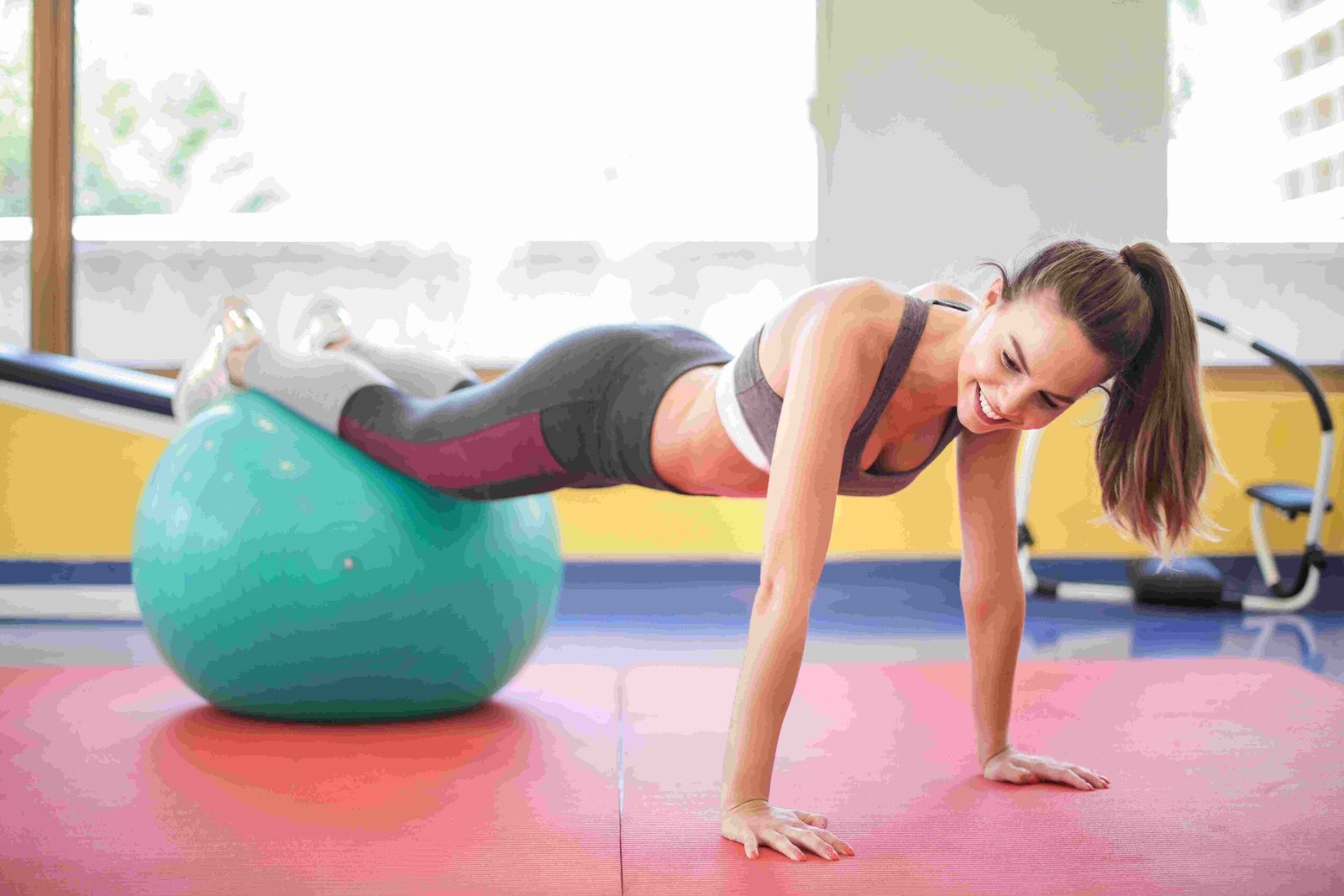
The Simple Exercises I Added to My Weekly Routine
For most of my adult life, my relationship with exercise looked like this: ignore it for months, feel guilty, sign up for something intense, go hard for two weeks, get exhausted or injured, quit, repeat.
I’ve done the 6am bootcamp phase. The home gym phase where I bought a barbell I eventually used as a coat rack. The running phase that ended when my knees started making sounds I’d never heard knees make before. Each time, I’d go too hard too fast, and each time, the whole thing would fall apart before it ever became a real habit.
What finally stuck — and I mean actually stuck, for over a year now — wasn’t a program. It wasn’t a trainer. It wasn’t some fancy equipment. It was a small collection of exercises so low-key that I felt almost embarrassed calling them “a fitness routine” at first.
But here’s the thing: they work. And more importantly, I still do them.
Why “Simple” Kept Getting Dismissed (And Why That Was the Problem)
I think most of us have been conditioned to believe that exercise only counts if it’s hard. If you’re not gasping, sweating through your shirt, or barely able to walk the next day — did it even do anything?
That mindset kept me bouncing between extremes. Either I was doing too much (and burning out), or I was doing nothing (and feeling terrible about it).
The shift happened when a physio I was seeing for a shoulder issue gave me a set of corrective exercises to do at home. Dead simple stuff — banded pull-aparts, wall slides, some hip flexor stretches. She told me to do them for ten minutes every morning.
I thought: that’s it? This barely counts.
But I did them. Every day, because they only took ten minutes and required zero motivation to start. And four weeks later, my shoulder felt better than it had in two years. My posture had visibly improved. I was sleeping better. And I’d built a daily movement habit — not because I was disciplined, but because the barrier to entry was so low that skipping felt like more effort than doing it.
That was the light-bulb moment. Low-key, consistent, and sustainable beats intense-and-abandoned every single time.
The Exercises That Made It Into My Weekly Rotation
I want to be clear: I’m not a personal trainer. These are just the exercises I personally found effective, enjoyable enough to keep doing, and suitable for someone with zero equipment and a living room that doubles as an office.
1. Dead Hangs
This one sounds a bit strange but it’s genuinely become my favourite two minutes of the day.
You find a bar — I use a doorframe pull-up bar from Amazon that cost about £25 — grip it with both hands, and just hang. Feet off the ground, shoulders relaxed, breathing normally. I started at 20 seconds and worked up to about 60–70 seconds over a couple of months.
What it does: decompresses the spine, opens up the shoulders, strengthens grip. If you sit at a desk most of the day, your spine is under compression for hours. Hanging reverses that. My lower back, which used to ache by mid-afternoon, has been noticeably quieter since I started doing this.
I do two or three hangs in the morning, sometimes another set before bed. Takes maybe three minutes total.
Common mistake: Tensing your shoulders up toward your ears. Let them drop. The whole point is passive decompression, not a strength move (at first).
2. Bodyweight Squats
Before you roll your eyes — I’m not talking about going to failure, tracking reps obsessively, or doing some elaborate variation. I mean a basic, slow, controlled squat. Down in three seconds, pause at the bottom for a moment, back up in two.
I do these in small sets throughout the day, not as one big workout. Ten squats when I make coffee. Ten when I finish a call. Ten before lunch. By the end of the day I’ve probably done 60–80 without it ever feeling like exercise.
This came from something I read about the concept of “exercise snacking” — breaking movement into small chunks across the day rather than one session. Studies from the University of British Columbia actually looked at this, and the results for blood sugar, cardiovascular health, and leg strength were surprisingly solid compared to single longer sessions.
The key is slow and controlled. If you’re flying through them, you’re using momentum, not your muscles.
3. Glute Bridges
I added these specifically because of the back pain problem. Weak glutes are one of the most common contributors to lower back issues, especially in people who sit for long periods — which is most of us.
Lie on your back, knees bent, feet flat on the floor. Push your hips up toward the ceiling, squeeze at the top, hold for a second, lower slowly. That’s it.
I do two sets of 15 in the morning as part of my ten-minute floor routine. Takes about three minutes. I started feeling the difference in my back and hips within two weeks — not dramatic, but real.
The mistake most people make: they push through their lower back instead of their glutes. Focus on squeezing your bum at the top, not arching your spine. If your lower back is doing all the work, you’re doing it wrong.
4. Push-Ups (But the Kind I Can Actually Do)
Here’s where I’ll be embarrassingly honest: when I restarted push-ups last year, I could do about six before my form completely fell apart. My core would sag, my neck would jut forward, and the whole thing looked like a building slowly collapsing.
Rather than forcing bad reps, I started with incline push-ups — hands on a kitchen counter, body at a 45-degree angle. Much more manageable, and I could actually feel the right muscles working.
Over about eight weeks, I progressed from counter-height to a chair height to the floor. I’m now doing sets of 20 with decent form. I track them loosely in the Apple Fitness app just to keep a rough record.
The progression matters more than the exercise itself. There’s no ego in starting where you actually are.
5. The “World’s Greatest Stretch” (Which Sounds Dramatic But Earns the Name)
I learned this from a YouTube channel called Squat University, which is run by a sports physiotherapist and, is one of the most genuinely useful fitness channels I’ve found.
Here’s the movement: start in a lunge position, front foot flat on the ground, back knee down. Take the hand on the same side as your front foot, and place it on the floor beside your foot. Then rotate your other arm up toward the ceiling, following it with your eyes.
Hold for a few seconds. Repeat on both sides. Do two or three rounds.
It sounds complicated written out, but it’s not — watch it once on YouTube and it’ll click. It covers hip flexors, thoracic spine rotation, hamstrings, and shoulder mobility all in one move. I do it before any other exercise as a warm-up and sometimes just mid-afternoon when I’m stiff from sitting.
6. Walking With Intention
I’ve talked about walking before, but I want to mention a specific addition I made: ending my walks with a slight incline whenever possible.
I live near a small hill, and I started deliberately finishing my morning walk by going up it rather than avoiding it. Not a mountain, not even particularly steep. But walking uphill for the last five minutes activates the glutes and calves far more than flat walking and nudges the heart rate up without the impact of running.
If you don’t have hills nearby, a treadmill incline works. Or stairs. Even walking the long way around a car park counts. The point is intentionality — making the walk slightly harder without making it a workout.
The Weekly Structure (Such As It Is)
I want to be upfront: this is loose. It’s not a program. It’s more like a collection of defaults.
Most mornings (10–15 minutes):
-
- Dead hangs × 2–3 sets
-
- Glute bridges × 2 sets of 15
-
- World’s Greatest Stretch × 2 rounds each side
-
- Incline or floor push-ups × 2 sets
Throughout the day:
-
- Bodyweight squat snacks (10 reps here and there, 4–6 times)
Most days:
-
- 25–35 minute walk, finishing uphill where possible
Some days I miss the morning routine. Some days the walk doesn’t happen. I don’t stress about it, and I don’t treat a missed day as a reason to write off the week. The “never miss twice” rule applies here too.
The Mistakes I Made (So You Don’t Have To)
Going too sore too fast. When I first added glute bridges and squats, I overdid the volume in week one because I felt fine. Then I could barely walk downstairs for three days. Start with less than you think you need.
Skipping the warm-up. The World’s Greatest Stretch feels optional when you’re in a hurry. It isn’t. I pulled something in my hip doing squats cold and sidelined myself for two weeks. Two minutes of prep is worth it.
Tracking too obsessively at first. I downloaded four fitness apps in January, logged every rep, and spent more time tracking than moving. Now I keep it dead simple — a note in my phone with the date when I do something, just to spot if I’ve been slipping. That’s all.
Comparing my routine to people online. YouTube fitness content is incredible for learning form, terrible for calibrating expectations. The people with six-pack progressions in 30 days are not representative of how fitness actually works for most people. Ignore the transformation content and focus on the how-to content.
A Year In — What’s Actually Different
My back pain is mostly gone. My posture is visibly better — a colleague commented on it unprompted, which felt genuinely good. My resting heart rate dropped from 72 to around 62 over the year, which my Garmin watch tracked without me doing anything special. I sleep better on days I move more.
None of those results came from going hard. They came from going consistently.
The routine I’ve settled into is embarrassingly modest by gym-culture standards. But it fits my life, it doesn’t require motivation to start, and I’ve stuck with it longer than anything else I’ve ever tried.
That’s the whole point. The best exercise routine is the one you’ll actually do — not the one that looks best on paper or in someone else’s Instagram feed.
Start small. Stay consistent. Let it compound.

- Healthy Snacks for Work: What Actually Kept Me From Raiding the Vending Machine at 3 PM - July 12, 2026
- What I Learned After Spending More Time Outdoors - July 10, 2026
- How I Learned to Enjoy Healthy Living Without Pressure - July 8, 2026